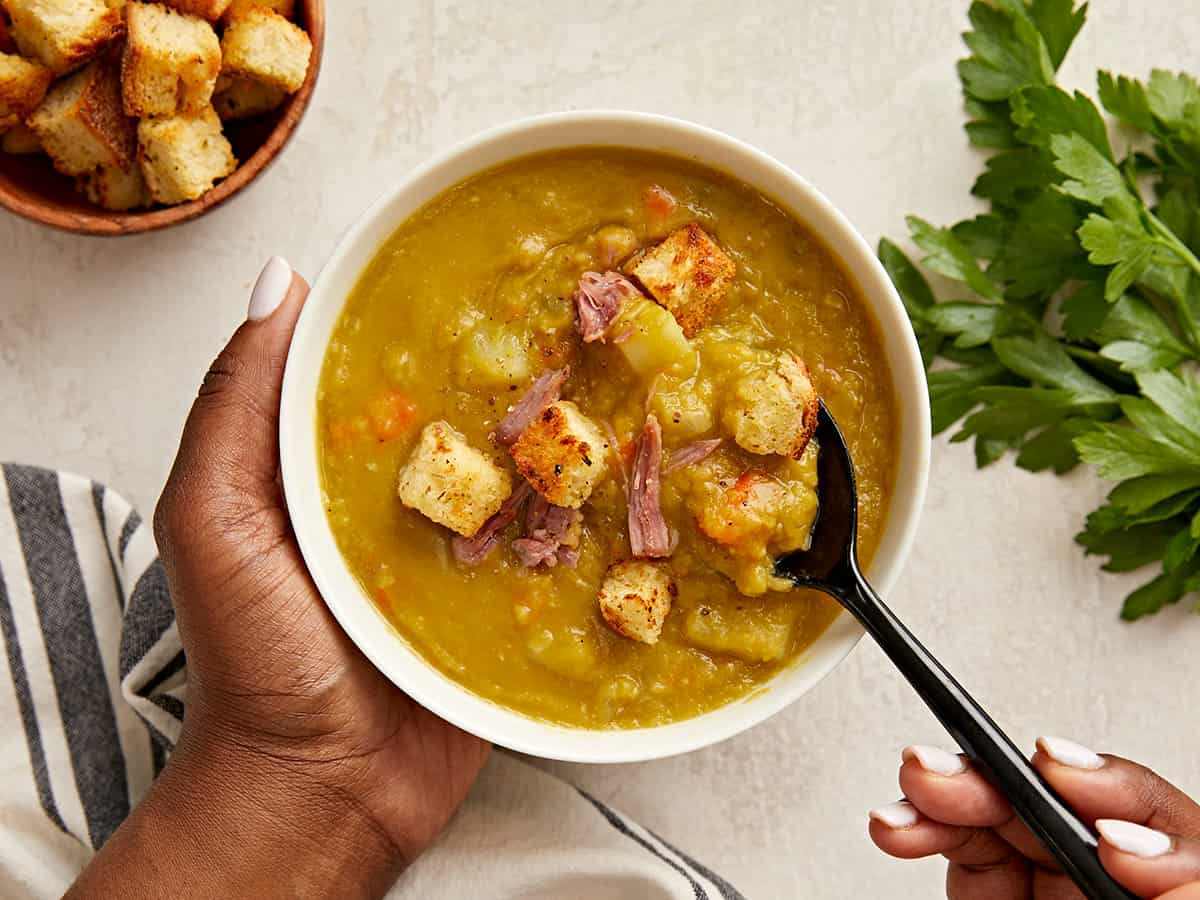
Easy & Budget-Friendly Split Pea Soup: Your Ultimate Comfort Bowl
Imagine a chilly evening, the kind that whispers for warmth and coziness. Now, picture a steaming bowl of thick, hearty soup, its aroma filling your kitchen with promises of comfort and nostalgia. That, my friends, is the magic of classic split pea soup. More than just a meal, it's a culinary hug, a dish that effortlessly marries deep, savory flavors with incredible ease and an appealingly low cost. If you've been searching for a go-to recipe that delivers on all fronts – taste, simplicity, and budget – you've just found your new favorite.
Often overlooked in favor of more elaborate creations, split pea soup stands proud as a timeless classic. It’s the kind of wholesome dish your grandmother might have lovingly simmered on the stove, filling the house with an inviting scent. And while it tastes like it took hours of intricate work, the truth is, this nourishing soup is surprisingly straightforward to prepare at home, making it a perfect candidate for weeknight dinners or leisurely weekend meals. Let's dive into what makes this humble bowl so irresistible.
Why Split Pea Soup is a Must-Make Comfort Classic
There’s a reason certain recipes become cherished family traditions, passed down through generations. Split pea soup with ham is undoubtedly one of them. Its enduring popularity stems from a perfect trifecta of qualities that resonate with home cooks everywhere.
The Unbeatable Comfort Factor
Few dishes can rival the profound sense of comfort that a bowl of split pea soup provides. Its thick, velvety texture, combined with nutrient-packed ingredients, makes it an incredibly nourishing choice, especially when the temperatures drop. It’s warm, substantial, and utterly satisfying – the culinary equivalent of wrapping yourself in a soft, woolen blanket on a cold day. Each spoonful offers a hearty embrace, promising to warm you from the inside out and soothe the soul.
A Depth of Flavor That Satisfies
What truly elevates split pea soup from simple to sublime is its incredible depth of flavor. This richness is often attributed to the star ingredient: ham. When green split peas are simmered slowly with a meaty ham bone, it imparts a deep, smoky, umami-rich essence that permeates every vegetable and pea, creating a complex, savory profile that is hard to resist. The bone not only contributes flavor from the residual meat and fat but also releases collagen and minerals, adding body and richness to the broth that can't be replicated with just diced ham alone. It's this slow infusion that transforms basic ingredients into something truly extraordinary.
Surprisingly Budget-Friendly & Sustainable
In an age where food costs are a constant concern, split pea soup shines as a remarkably economical choice. Dried split peas are one of the most inexpensive protein sources available, offering great nutritional value without breaking the bank. Furthermore, this soup is a champion of sustainability, often utilizing a leftover ham bone from a holiday meal like Easter, Thanksgiving, or Christmas. By transforming what might otherwise be discarded into the flavorful foundation of a new dish, you're not only creating a delicious meal but also reducing food waste – a win-win for your wallet and the planet.
Decoding the Ingredients: What You Need for the Perfect Bowl
The beauty of split pea soup lies in its humble, accessible ingredients. You won't find any exotic spices or hard-to-find produce here, just honest, wholesome components that come together to create something truly magical.
Split Peas vs. Green Peas: A Crucial Distinction
Before you even start, it's essential to understand the difference between split peas and fresh green peas. Green peas are fresh legumes, harvested when young and tender, typically eaten as a vegetable. Split peas, on the other hand, are dried, hulled, and then mechanically split in half. This splitting allows them to cook faster and become wonderfully creamy, making them ideal for soups, stews, and purées, much like lentils. So, when you're at the grocery store, ensure you grab a bag of dried split peas (either green or yellow) rather than a bag of fresh or frozen green peas.
- Green Split Peas: Tend to be slightly sweeter and retain a bit more of their vibrant color.
- Yellow Split Peas: Offer a slightly earthier flavor and will result in a more golden-hued soup. Both work beautifully, so choose based on preference!
The Flavor Foundation: Mirepoix & Aromatics
Every great soup begins with a strong aromatic base, and split pea soup is no exception. A simple mirepoix blend of fresh vegetables is all you need:
- Onions: Provide a foundational sweetness and pungent aroma.
- Carrots: Add natural sweetness and a touch of color.
- Celery: Contributes a subtle, earthy, and slightly peppery note.
Ensure you dice these vegetables to roughly the same size to promote even cooking. Beyond the mirepoix, a little dried thyme and a bay leaf are the classic herbs that perfectly complement the savory ham and earthy peas, while salt and pepper adjust to taste.
The Star Ingredient: Ham & Its Versatility
While split pea soup is traditionally made with a meaty ham bone, what if you don't have one readily available? Don't despair! The beauty of this recipe lies in its adaptability. You have several excellent options to ensure your soup still achieves that beloved deep pork flavor and satisfying texture.
- Ham Bone: The gold standard. A leftover bone from a holiday ham is ideal, but you can often purchase meaty ham bones directly from a butcher or even specialty ham stores. Request that they leave plenty of meat on the bone for maximum flavor and texture.
- Ham Hock: Also known as a pork knuckle, a ham hock is a fantastic way to impart rich, smoky pork flavor into your soup as it simmers. While it may not provide large chunks of ham to chop back into the soup, the meat on the hock will often fall apart beautifully, adding tender morsels. For extra chunky pieces, you can combine a ham hock with diced ham steak.
- Ham Steak/Diced Ham: If convenience is key or a bone isn't an option, pre-packaged ham steaks or already diced ham are perfectly viable. Simply dice them up and add them towards the end of the cooking process to avoid drying them out. While this method might not yield the same deep, slow-cooked bone flavor, it still delivers on the essential ham taste.
For a deeper dive into these options and how to best use them, check out our detailed guide: Split Pea Soup: Ham Bone & Alternative Options Explained.
The Liquid Gold: Broth & Water
The liquid base for your split pea soup is straightforward: a combination of chicken broth and water. Using half broth and half water provides a flavorful foundation without overwhelming the delicate balance of the peas and ham. You can adjust the ratio based on your preference for intensity, or use all broth for an even richer soup.
Mastering the Art of Split Pea Soup: Tips for Success
While inherently simple, a few expert tips can elevate your homemade split pea soup from good to truly unforgettable.
Prep Makes Perfect
- Rinsing Split Peas: Always give your dried split peas a good rinse under cold running water before cooking. This removes any dust or debris.
- Soaking (Optional but Helpful): Unlike some other dried legumes, split peas don't *require* pre-soaking. However, soaking them for a few hours or overnight can slightly reduce cooking time and, for some, make them easier to digest. If you opt to soak, discard the soaking water and rinse again before cooking.
- Uniform Dicing: As mentioned, dicing your onions, carrots, and celery to roughly the same size ensures they cook evenly and become tender at the same rate, integrating smoothly into the soup.
The Simmering Secret
Patience is a virtue when making split pea soup. The magic happens during a slow, gentle simmer. This extended cooking time allows the split peas to break down and become incredibly creamy, the ham bone to release its full flavor, and all the ingredients to meld into a harmonious whole. Keep the heat on low to medium-low, just enough for a gentle bubble, to prevent scorching and ensure maximum flavor extraction.
As the soup simmers, you might notice some foam rising to the surface, especially if using a ham bone. This is natural; simply skim it off with a spoon for a clearer, cleaner broth. Also, remember to season towards the end of cooking. The ham bone can be quite salty, so taste first before adding more salt.
Customizing Your Comfort
Once you master the basic split pea soup, feel free to experiment! Here are a few ideas:
- Smoked Paprika: A pinch of smoked paprika can enhance the smoky notes, especially if you're using diced ham instead of a bone.
- Touch of Sweetness: Some prefer a hint of sweetness; a small amount of brown sugar or maple syrup can balance the savory flavors beautifully.
- Fresh Herbs: While dried thyme is classic, a sprinkle of fresh chopped parsley or chives before serving adds a lovely brightness.
- Creamy Swirl: For an extra rich finish, swirl in a tablespoon of heavy cream or a dollop of Greek yogurt just before serving.
- Vegetarian Version: Omit the ham and use vegetable broth. Add smoked paprika or liquid smoke for a hint of smoky flavor, and consider adding mushrooms or sun-dried tomatoes for extra umami.
Serving Suggestions & Leftovers
Your homemade split pea soup is best served piping hot, perhaps with a sprinkle of fresh cracked black pepper and a side of crusty bread for dipping. The bread is perfect for soaking up every last drop of that comforting broth.
This soup also makes fantastic leftovers. It tends to thicken even more as it cools, so you may need to add a splash of water or broth when reheating to achieve your desired consistency. It stores beautifully in an airtight container in the refrigerator for 3-4 days and can also be frozen for up to 3 months, making it an excellent meal prep option.
Embrace the Warmth of Homemade Split Pea Soup
From its humble origins to its comforting embrace, split pea soup with ham is truly a culinary gem. It’s a testament to how simple, affordable ingredients, combined with a little time and care, can create something truly extraordinary. Whether you're looking to utilize a leftover ham bone, searching for a budget-friendly family meal, or simply craving that deep, soul-warming comfort, this recipe delivers every time. So, grab your pot, gather your ingredients, and prepare to fill your home – and your heart – with the irresistible warmth of homemade split pea soup. It’s more than just a meal; it's an experience of cozy satisfaction in every single spoonful.
